 Skip to navigation
Skip to main content


Blog
What is my hair porosity and what does it mean?

Hair porosity refers to how well your hair is able to absorb and hold moisture. It depends on the flexible outer hair layer called the cuticle. This layer controls how easily moisture and oils pass in and out of your hair. For most people, porosity is genetic. However, heat treatments and chemical processing can also change it. Knowing your hair’s porosity helps you choose the right products, so your hair stays well-moisturised, strong and shiny.

Recommended for this guide
Black Castor Oil + Baicapil Hair Strengthen and Restore Custard
A leave-in custard with black castor oil and Baicapil that moisturises, defines and strengthens natural hair.

How to Test Your Hair Porosity at Home
There are two simple methods you can use to find out how porous your hair is. Both take only a few minutes, and you can do them with a bowl of water or a spray bottle. For more background, see this guide to hair porosity from Healthline.
- The Float Test: Take a few strands of hair from your comb or brush and drop them into a bowl of water. Let them sit for 2-4 minutes. If your hair floats, you have low porosity. If it sinks, you have high porosity.
- THE H20 TEST: Spritz a small section of curls with water and watch how your hair reacts. Does your hair absorb the water quickly? Then you likely have high porosity. If the water stays on top, your porosity level is probably low.
Shop the products in this guide
Black Castor Oil + Baicapil Hair Strengthen and Restore Custard

Black Castor Oil + Baicapil Hair Growth Serum – For Stronger, Fuller Afro Hair 100ml
LOW POROSITY HAIR
- Hair with low porosity has a tightly bound cuticle layer with overlapping scales that lay flat.
- This type of hair is usually considered healthy. It is often very shiny, especially when it’s dark in colour.
- It repels moisture when you try to wet it. It is also hard to process, since it resists chemicals.
- In addition, protein-rich deep conditioning products can cause build-up, which leaves it feeling stiff and straw-like.
- Stick to protein-free conditioners/ moisturisers
- Use moderate heat with deep conditioning treatments to help open up the tightly bound cuticle.
- Choose moisturisers rich in emollients such as shea butter, jojoba oil, coconut oil and mineral oil.
- It also benefits from humectant products, which attract and hold moisture in your hair. So, glycerin is your friend.
- Choose lighter, liquid-based products such as hair milks that won’t sit on your hair and leave it oily or greasy.
Low Porosity Curl Care
This hair type has very dense cuticles, so it’s hard to get moisture into the hair shaft. However, it does retain moisture once it absorbs it. To raise the cuticle, follow these tips:
- Use heat. Use a deep treatment under a hooded drier, steamer or even a warm towel or shower cap. This helps products absorb and bind with the hair better.
- Always distribute products evenly throughout your hair making sure not to put too much on.
- Apply products to damp, not drenched hair.
- Use a sulfate-free shampoo to rid your hair of product build-up. Rinses such as apple cider vinegar or baking soda treatments can also help.
MEDIUM HAIR POROSITY
- Hair with medium porosity often requires the least amount of maintenance.
- The cuticle layer is looser, allowing just the right amount of moisture to enter while preventing too much from escaping.
- Hair with normal porosity tends to hold styles well. It can also be permed and coloured with predictable results.
- Over time, however, these processes can damage your hair and increase its porosity.
- Occasional deep conditioning treatments with protein conditioners can benefit medium porosity hair. However, avoid including proteins in your daily regimen.
Medium Porosity Curl Care
Hair with medium porosity has compact cuticles that easily let moisture enter in.
- Continue to do regular deep conditioning treatments to maintain good product absorption.
HIGH POROSITY HAIR
- High porosity can be an inherent property of hair. It can also be the result of chemical processing, rough treatment or environmental damage.
- This hair type has gaps and holes in the cuticle. These let too much moisture into your hair, so it is prone to frizz and tangling in humid weather.
- Even simple acts like bathing, swimming and shampooing can cause more damage and breakage. That is because highly porous hair can absorb so much moisture.
- Be sure to use anti-humectants in climates with high heat and humidity. This will help seal your damaged cuticles and stop them from absorbing excess moisture in the air.
- Because highly porous hair also loses moisture easily, it’s important to use leave-in conditioners, moisturisers and sealers.
- Layering these products will help your hair hold on to the moisture you’re giving it. You can then follow up with a heavy hair butter. It helps fill the gaps in your damaged cuticles and further protects your hair from losing too much moisture.
High Porosity Curl Care
Dehydrated, thirsty hair needs products that help it retain as much moisture as possible, so follow these tips to increase hydration:
- Use minimal heat. If possible, it’s best to air dry your hair.
- Incorporate regular deep conditioning treatments into your curl care routine.
- Rinse with cool water to seal the cuticle and prevent frizz.
- Detangle gently with a wide-tooth comb to prevent hair loss and reduce hair breakage.
Remember, there are no “good” or “bad” hair types- it’s all about knowing how to care for the hair that you have. Two people with the same curl patterns may have different porosity, and therefore need to use very different products.
Once you know your hair porosity, you can build a routine that works with your hair rather than against it. Browse our natural hair care products to find the right match for your curls.
Shop the routine
Black Castor Oil + Baicapil Hair Strengthen and Restore Custard
Black Castor Oil + Baicapil Hair Growth Serum – For Stronger, Fuller Afro Hair 100ml
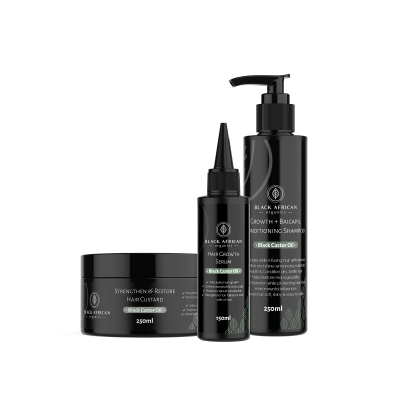
Black Castor Oil + Baicapil Deluxe Natural Hair Growth Kit – For Kinky, Coily, Afro-Textured Hair (3 Products)
-
✨ Why you Afro will love you :
✔️ 🌿 Boosts hair growth & reduces breakage
✔️ 💥 Fills bald spots & supports hairline restoration
✔️ 💧 Improves moisture, porosity & softness
✔️ 🧴 Makes afro/kinky hair more manageable
✔️ 👶 Safe for kids, teens & all hair types
✔️ 🧠 Powered by Baicapil™ & Jamaican Black Castor Oil
✔️ 💁🏾♀️ Great for 4C, natural, relaxed & transitioning hair

