


Blog
10 Early Warning Signs of Acne and Skin Problems Most People Ignore

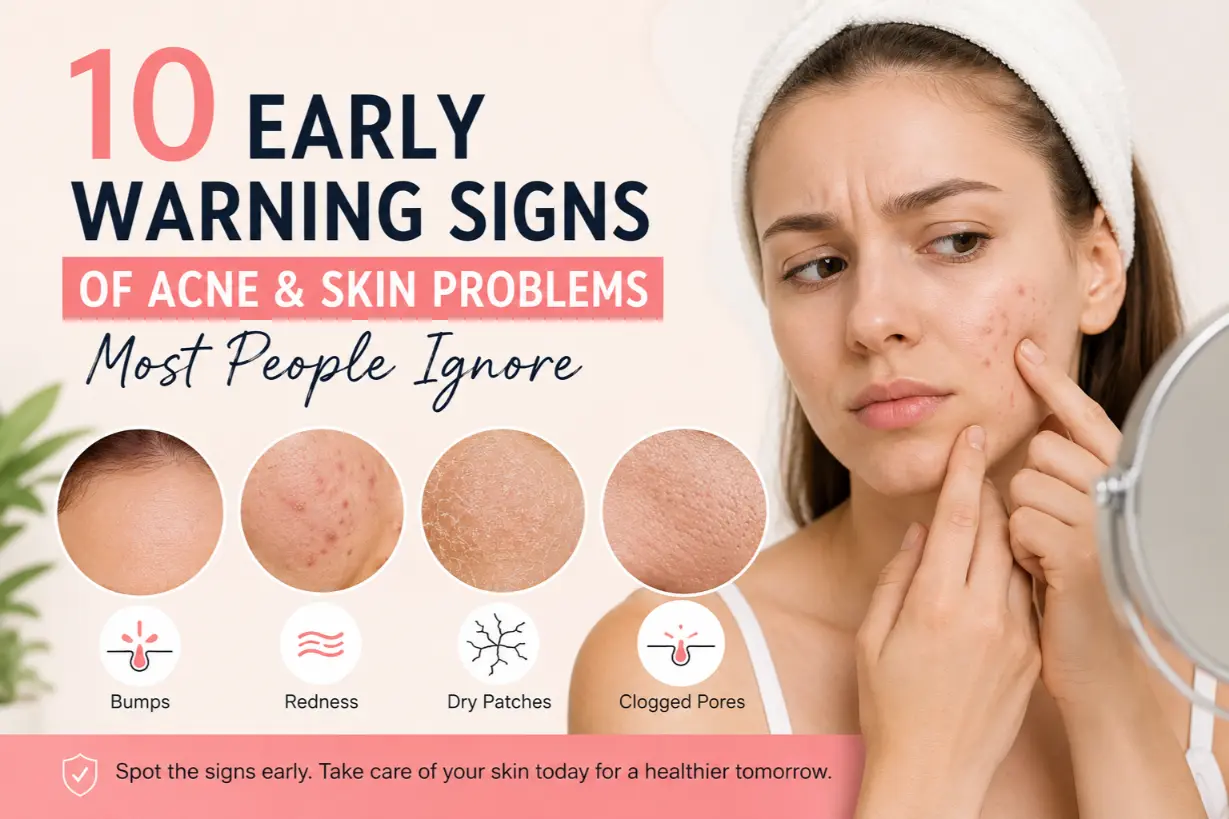
Most people think acne just suddenly appears out of nowhere.
One day your skin looks fine, and the next morning there’s a painful breakout on your chin or forehead. But in reality, your skin usually gives small warning signs long before things get worse. The problem is that most of us either don’t notice them—or we ignore them until the damage is already done.
And honestly, it’s understandable. Social media has made skincare feel complicated. Every week there’s a new “miracle” product, trending ingredient, or 10-step routine promising perfect skin. So when your skin starts acting differently, it’s easy to think you just need another serum or stronger cleanser.
Here are some of the early signs your skin may be trying to tell you something.
1. Your skin suddenly feels oilier than usual
If your skin has always been oily, that’s one thing. But if you suddenly notice your face getting greasy faster than normal, your skin could be reacting to stress, hormones, weather changes, or irritation.
A lot of people immediately try to “dry out” the oil with harsh face washes. Ironically, that often makes things worse.
When your skin becomes stripped or dehydrated, it sometimes produces even more oil to compensate. That extra oil can clog pores and lead to breakouts later on.
Sometimes oily skin isn’t a cleanliness issue at all—it’s your skin trying to protect itself.
2. Tiny bumps that never fully turn into pimples
You know those little skin-colored bumps that sit under the surface and never really go away?
A lot of people ignore them because they’re not red or painful. But those tiny bumps are often one of the earliest signs of clogged pores developing beneath the skin.
They usually appear on:
- the forehead
- cheeks
- chin
- jawline
And over time, they can turn into inflamed acne if your skin continues getting congested.
This is often where acne starts quietly before becoming noticeable.
3. Your skincare products suddenly burn or sting
A slight tingling sensation from certain active ingredients can happen sometimes. But if products that used to feel fine now burn, sting, or leave your skin red, that’s not something to ignore.
Many people mistake irritation for “the product working.”
In reality, your skin barrier may already be damaged.
This happens a lot with:
- over-exfoliating
- using too many acids at once
- layering strong acne treatments
- washing the face too often
When your skin barrier becomes weakened, your skin becomes more reactive, sensitive, and breakout-prone.
4. You’re getting both dry patches and acne at the same time
This confuses a lot of people.
“How can my skin be dry and breaking out?”
But dehydrated skin can actually trigger more oil production, which may lead to clogged pores and irritation. At the same time, harsh acne treatments can leave certain areas flaky or tight.
It creates a frustrating cycle:
- skin feels dry
- you use stronger products
- skin gets more irritated
- breakouts continue
Sometimes your skin doesn’t need stronger treatment—it needs recovery.
5. Breakouts keep appearing in the same area
If acne keeps showing up in the same spot over and over again, your skin is probably reacting to a pattern in your daily routine.
For example:
- jawline acne may be connected to hormones or stress
- forehead breakouts can come from sweat, hair products, or oily buildup
- cheek acne may be linked to phones, pillowcases, or touching your face
Recurring acne is usually your skin trying to point toward a specific trigger.
Your skin often becomes predictable once you start paying attention to patterns.
6. Your makeup suddenly doesn’t sit right anymore
Sometimes makeup notices skin problems before you do.
Foundation may start:
- looking patchy
- separating quickly
- clinging to texture
- appearing unusually dry or oily
A lot of people blame the makeup itself, but changes in how products sit on your skin often signal dehydration, irritation, clogged pores, or inflammation underneath.
When skin health changes, makeup usually exposes it first.
7. Your skin looks dull no matter what products you use
Healthy skin doesn’t necessarily mean perfect skin. But when your face constantly looks tired, uneven, or flat—even after moisturizing—it may be a sign your skin is stressed.
Common causes include:
- lack of sleep
- dehydration
- stress
- buildup from products
- damaged skin barrier
Many people chase “glowing skin” by adding more products. But real skin health often comes from consistency, hydration, and giving your skin time to calm down.
8. Redness that never fully disappears
Temporary redness after exercise or heat is normal. But ongoing redness around the nose, cheeks, or chin can be an early warning sign of irritation or inflammation.
This is especially common when people overuse:
- exfoliating acids
- retinol
- acne treatments
- scrubs
Constant redness is your skin asking for a break.
And if ignored for too long, that irritation can sometimes turn into sensitivity issues or more severe breakouts.
9. Painful bumps under the skin keep appearing
These are often early signs of cystic or hormonal acne.
Unlike regular pimples, under-the-skin bumps can feel sore before they’re even visible. They tend to linger longer and may leave marks afterward.
Stress, hormones, lack of sleep, and inflammation are common triggers.
A lot of people try to squeeze or aggressively treat these bumps, which usually causes more irritation and scarring.
Sometimes the best thing you can do is stop attacking your skin.
10. Your skin suddenly reacts to products you’ve used for years
If a cleanser or moisturizer has always worked for you and suddenly doesn’t, your skin may be changing—not necessarily the product.
Skin changes over time because of:
- age
- stress
- hormones
- weather
- lifestyle changes
- overuse of active ingredients
Your skincare routine should evolve with your skin instead of staying exactly the same forever.
What most people do when these signs appear
This is where things usually go wrong.
People panic and:
- buy multiple new products at once
- scrub harder
- over-cleanse
- use strong acne treatments daily
- follow random skincare trends online
But when your skin is already stressed, overwhelming it usually creates even more problems.
More products don’t always mean better skin.
What actually helps early on
You don’t need a 15-step skincare routine.
In many cases, simplifying things helps more.
Focus on:
- gentle cleansing
- hydration
- sunscreen
- consistency
- giving products time to work
And most importantly, pay attention to patterns instead of reacting emotionally every time your skin changes.
Your skin is usually communicating something long before a major breakout appears.
When it’s time to see a dermatologist
Sometimes skincare products alone aren’t enough.
It’s worth getting professional help if:
- acne becomes painful
- breakouts appear suddenly and severely
- your skin starts scarring
- irritation won’t calm down
- nothing improves after weeks of consistent care
There’s no shame in needing help with your skin. Acne is incredibly common, and sometimes the cause goes deeper than surface-level skincare.
Most skin problems don’t appear overnight. Your skin usually sends small warning signs first—we just tend to ignore them until things become harder to manage.
The good news is that paying attention early can make a huge difference.
Not every breakout means your skin is “bad,” and not every skincare trend is necessary. Sometimes understanding your skin matters more than constantly trying to fix it.
Healthy skin is rarely about perfection. It’s about learning what your skin needs—and noticing when it’s asking for help.
Related Posts
What Is Shea Butter… and its amazing Benefits?

One thought on “10 Early Warning Signs of Acne and Skin Problems Most People Ignore”
Comments are closed.
Well, I landed on this by accident, which doesn’t happen often. Not gonna lie I understood this topic better after reading which made it more readable.