 Skip to navigation
Skip to main content


Blog
Fading Dark Marks vs Lightening Skin: What Black Soap and Vitamin C Can and Cannot Do


Fading dark marks and lightening your skin are not the same thing. Fading means helping extra pigment in spots and patches return towards your natural tone. Lightening (bleaching) means trying to make your whole skin lighter than it naturally is. Black soap, vitamin C and sunscreen can help fade the look of dark marks. None of them will, or should, bleach your natural skin colour.
Recommended for this guide
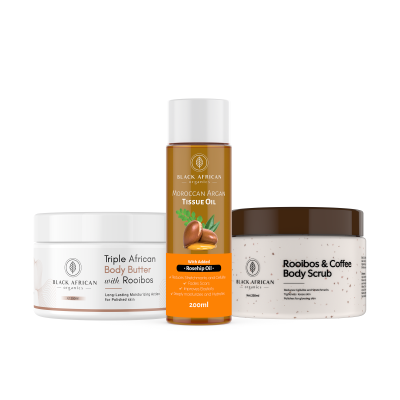
Argan Tissue Oil + Rooibos & Coffee Scrub Body Kit for Stretch Marks & Cellulite (3 Products)
Tissue oil plus rooibos and coffee scrub: a complete kit for stretch marks and cellulite.
What is the difference?
| Fading dark marks | Lightening or bleaching | |
|---|---|---|
| Goal | Even out spots, patches and pimple marks | Make all of your skin lighter |
| Typical ingredients | Vitamin C, niacinamide, licorice extract, daily sunscreen | High-strength hydroquinone, steroids, mercury |
| Safety | Gentle when used as directed | Can thin skin and cause rebound darkening or blue-black patches |
| Result | Your own skin tone, more even | Often uneven, damaged skin over time |
Does African black soap lighten skin?
No. Real African black soap is a deep cleanser made from plant ash and oils. It does not bleach skin. Bars sold as “whitening black soap” may contain other ingredients, so read the label. Our black soap guide explains what it does and does not do.
Shop the products in this guide
★ Bestseller
Argan Tissue Oil + Rooibos & Coffee Scrub Body Kit for Stretch Marks & Cellulite (3 Products)
✨ Why your curves will love you:
✔️ ☕ Exfoliates & boosts circulation with coffee & rooibos
✔️ 🌹 Rosehip oil helps soften the look of stretch marks and scars
✔️ 💧 Deeply hydrates & softens with Moroccan argan oil
✔️ 🌿 Improves skin texture, tone & elasticity
✔️ ✅ Natural, non-greasy & safe for all skin types
✔️ 🧴 Perfect for pregnancy, weight loss & daily body care

Moroccan Argan, Vitamin E & Rosehip Organic Tissue Oil for Stretch Marks, Scars & Dry Skin 200ml
Does vitamin C lighten skin?
No. Vitamin C helps improve the look of dark marks and dullness, so skin looks brighter and more even. It does not change your natural skin colour. Our Vitamin C Serum is made for this.
Does tissue oil lighten skin?
No. Tissue oil moisturises and softens skin. It does not bleach or lighten your skin tone. Read our tissue oil guide.
Why bleaching creams are risky
Strong skin-lightening creams, especially those bought without a prescription, can contain high-strength hydroquinone, steroids or even mercury. Long-term use can thin the skin, cause stretch marks and acne, and in some people cause a blue-black darkening called exogenous ochronosis. South African doctors first described this problem decades ago, and it is still seen today. Hydroquinone should only be used under a doctor’s guidance.
Many people who come to us for help with chubaba have used these creams in the past. There is no judgement: stop using them, protect your skin from the sun, and see a doctor if you have grey or blue-black patches.
How to fade dark marks safely
- Wear sunscreen every day.
- Use a brightening serum with vitamin C or niacinamide.
- Cleanse gently and moisturise.
- Avoid lemon juice, toothpaste, bleach and harsh scrubs.
- Be patient: give it two to three months.
See our dark marks guide for the full routine.
FAQs
Is “brightening” the same as “whitening”?
On a good label, no. Brightening means less dull and more even. Whitening usually means bleaching. Read the ingredients.
Can I use vitamin C and black soap together?
Yes. Cleanse with black soap, then apply vitamin C serum and moisturiser, and sunscreen in the morning.
Written by the Black African Organics team. General skincare information, not medical advice.
Sources
- Findlay et al. (1975), Exogenous ochronosis from hydroquinone bleaching creams (South Africa)
- Davis & Callender (2010), PIH in skin of color: treatment options
- American Academy of Dermatology: How to fade dark spots in darker skin tones
Shop the routine
★ Bestseller
Argan Tissue Oil + Rooibos & Coffee Scrub Body Kit for Stretch Marks & Cellulite (3 Products)
✨ Why your curves will love you:
✔️ ☕ Exfoliates & boosts circulation with coffee & rooibos
✔️ 🌹 Rosehip oil helps soften the look of stretch marks and scars
✔️ 💧 Deeply hydrates & softens with Moroccan argan oil
✔️ 🌿 Improves skin texture, tone & elasticity
✔️ ✅ Natural, non-greasy & safe for all skin types
✔️ 🧴 Perfect for pregnancy, weight loss & daily body care
Moroccan Argan, Vitamin E & Rosehip Organic Tissue Oil for Stretch Marks, Scars & Dry Skin 200ml

Deep Moisturizing Rooibos Infused African Shea Body Butter 250ml

Urea & Lavender Deep Moisture Butter for Dry, Itchy-Feeling & Eczema-Prone Skin 250ml
✨ Key Benefits:
✔️ 💧 Deeply moisturizes dry, flaky & irritated skin
✔️ 🌿 Moisturises dry, rough and eczema-prone skin
✔️ 💜 Soothes with natural lavender oil
✔️ 🔬 Urea helps soften rough, dry skin
✔️ 🚫 No perfume, no colorants, no preservatives
✔️ 👶 Gentle formula (patch test first; ask a pharmacist before using on babies) — even sensitive skin