 Skip to navigation
Skip to main content


Blog
Sunscreen for Dark Skin in South Africa: Why It Matters and How to Choose

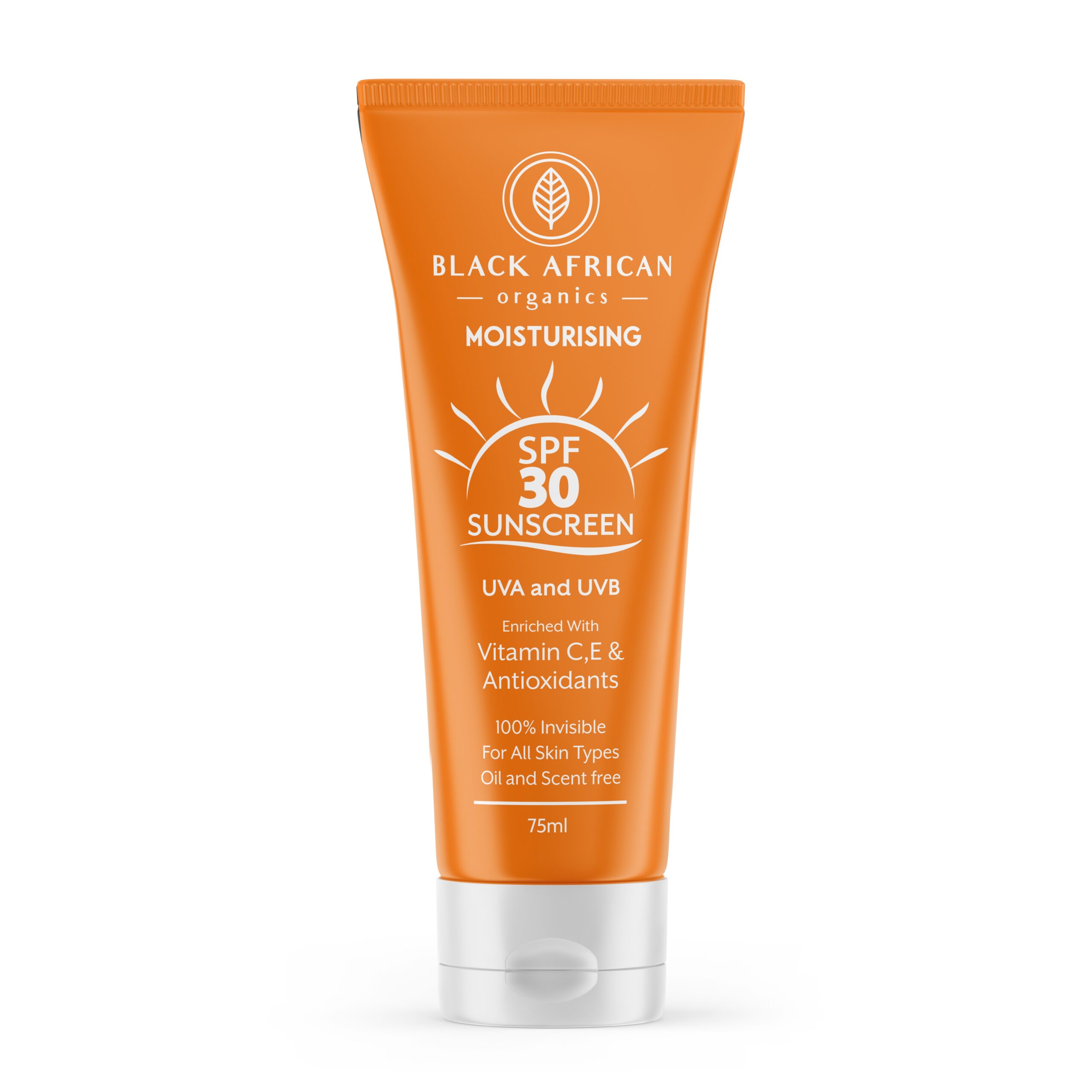
Yes, dark skin needs sunscreen. Melanin gives some natural protection against burning, but it does not stop the sun from darkening dark marks, chubaba and melasma. For daily use, choose an SPF 30 or higher that protects against UVA and UVB, feels light enough to wear every day, and leaves no white cast on your skin tone. If you have stubborn pigmentation, a tinted sunscreen with iron oxides adds extra protection.
Recommended for this guide
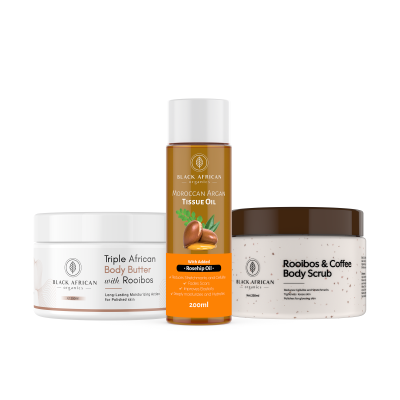
Argan Tissue Oil + Rooibos & Coffee Scrub Body Kit for Stretch Marks & Cellulite (3 Products)
Tissue oil plus rooibos and coffee scrub: a complete kit for stretch marks and cellulite.
Why dark skin needs sunscreen in South Africa
South Africa has high UV levels for most of the year, not just in summer. On darker skin, the biggest everyday risk is not sunburn but pigment: UV light triggers melanin, which makes existing marks darker and slows fading. Research reviews on dark marks and melasma in skin of colour agree that daily sunscreen is the most consistent way to stop them getting worse and to prevent new ones.
Sunscreen also protects against skin cancer, which can affect people of every skin tone, even if it is less common on dark skin.
What do SPF, UVA and UVB mean?
- UVB causes burning. SPF measures protection against UVB. SPF 30 filters out about 97% of UVB rays when you apply enough.
- UVA goes deeper, ages the skin and darkens pigment. Look for “broad-spectrum” or a UVA logo on the label.
- Visible light (ordinary daylight) can also darken melasma in darker skin. Normal clear sunscreens do not block it; tinted sunscreens with iron oxides do.
Shop the products in this guide
★ Bestseller
Argan Tissue Oil + Rooibos & Coffee Scrub Body Kit for Stretch Marks & Cellulite (3 Products)
✨ Why your curves will love you:
✔️ ☕ Exfoliates & boosts circulation with coffee & rooibos
✔️ 🌹 Rosehip oil helps soften the look of stretch marks and scars
✔️ 💧 Deeply hydrates & softens with Moroccan argan oil
✔️ 🌿 Improves skin texture, tone & elasticity
✔️ ✅ Natural, non-greasy & safe for all skin types
✔️ 🧴 Perfect for pregnancy, weight loss & daily body care

Moroccan Argan, Vitamin E & Rosehip Organic Tissue Oil for Stretch Marks, Scars & Dry Skin 200ml
Why some sunscreens leave a white cast
Mineral sunscreens use zinc oxide or titanium dioxide. These white particles sit on the skin and can look grey or chalky on brown and dark skin. One study found mineral sunscreens had nearly three times more whitening effect on dark skin than on light skin.
Sunscreens with organic (chemical) filters absorb UV instead, so they rub in clear. That is why clear sunscreens are popular with people of colour, and why many people actually wear them every day, which is what counts.
How to choose a sunscreen for dark skin
- SPF 30 or higher for daily use.
- Broad-spectrum (UVA and UVB) on the label.
- No white cast on your skin. Test it on your jawline in daylight.
- A texture you like, light enough for every morning and under make-up.
- Tinted with iron oxides if you have melasma or stubborn chubaba. Ask a dermatologist for a shade that matches you.
Our SPF 30 for melanin-rich skin
Our Vitamin C & E SPF 30 Sunscreen (50ml, R199) uses organic filters, so it blends into brown and dark skin without a white cast. It also contains vitamins C and E and squalene, so it doubles as a light moisturiser in the morning. It is not tinted, so if you have melasma, ask your doctor whether you also need a tinted sunscreen.
Fading dark marks? Get it with the full routine in our Deluxe Face Kit with SPF 30.
How to apply sunscreen properly
- Use enough: about two finger-lengths for face and neck.
- Apply last in your morning routine, after moisturiser.
- Reapply every two hours outdoors, and after sweating or swimming.
- Do not forget ears, neck, hairline and the back of your hands.
- Wear it on cloudy days and near windows. UVA passes through clouds and glass.
- Add a hat and shade in the middle of the day. Sunscreen works best with them.
Common sunscreen myths
“Black people don’t need sunscreen.”
Melanin reduces burning but does not stop UV from darkening marks, causing uneven tone or ageing the skin.
“Sunscreen will make me lighter.”
No. Sunscreen does not bleach skin. It helps prevent extra darkening, so your natural tone looks more even.
“Sunscreen causes vitamin D deficiency.”
Studies show sunscreen users’ vitamin D levels stay in the normal range. If you are worried, ask your doctor about a blood test or a supplement.
When to see a doctor
See a doctor or dermatologist if a mole or dark spot changes shape, colour or size, bleeds, or does not heal, including on the palms, soles and under the nails. These areas matter on darker skin.
FAQs
Is SPF 30 enough for dark skin?
For daily use, yes, if you apply enough and reapply outdoors. For long days outside, use SPF 50 or higher and seek shade.
Can I use sunscreen as my moisturiser?
A moisturising sunscreen like ours can replace a day cream for some people. If your skin is dry, apply moisturiser first.
Do I need sunscreen indoors?
If you sit near windows or go outside during the day, yes. UVA passes through glass.
Start protecting your skin today. Shop SPF 30 Sunscreen (R199) or see the chubaba routine.
Written by the Black African Organics team. General skincare information, not medical advice.
Sources
- Fatima et al. (2020), The role of sunscreen in melasma and PIH
- Ahmed et al. (2025), Prevention of PIH in skin of colour: a systematic review
- JCAD summary of AAD abstracts: mineral sunscreen white cast and tinted sunscreens for skin of colour
- Davis & Callender, PIH review (includes sunscreen and vitamin D)
Shop the routine
★ Bestseller
Argan Tissue Oil + Rooibos & Coffee Scrub Body Kit for Stretch Marks & Cellulite (3 Products)
✨ Why your curves will love you:
✔️ ☕ Exfoliates & boosts circulation with coffee & rooibos
✔️ 🌹 Rosehip oil helps soften the look of stretch marks and scars
✔️ 💧 Deeply hydrates & softens with Moroccan argan oil
✔️ 🌿 Improves skin texture, tone & elasticity
✔️ ✅ Natural, non-greasy & safe for all skin types
✔️ 🧴 Perfect for pregnancy, weight loss & daily body care
Moroccan Argan, Vitamin E & Rosehip Organic Tissue Oil for Stretch Marks, Scars & Dry Skin 200ml

Deep Moisturizing Rooibos Infused African Shea Body Butter 250ml

Urea & Lavender Deep Moisture Butter for Dry, Itchy-Feeling & Eczema-Prone Skin 250ml
✨ Key Benefits:
✔️ 💧 Deeply moisturizes dry, flaky & irritated skin
✔️ 🌿 Moisturises dry, rough and eczema-prone skin
✔️ 💜 Soothes with natural lavender oil
✔️ 🔬 Urea helps soften rough, dry skin
✔️ 🚫 No perfume, no colorants, no preservatives
✔️ 👶 Gentle formula (patch test first; ask a pharmacist before using on babies) — even sensitive skin