 Skip to navigation
Skip to main content


Blog
Why Pimples Leave Dark Marks on Darker Skin, and How to Fade Them

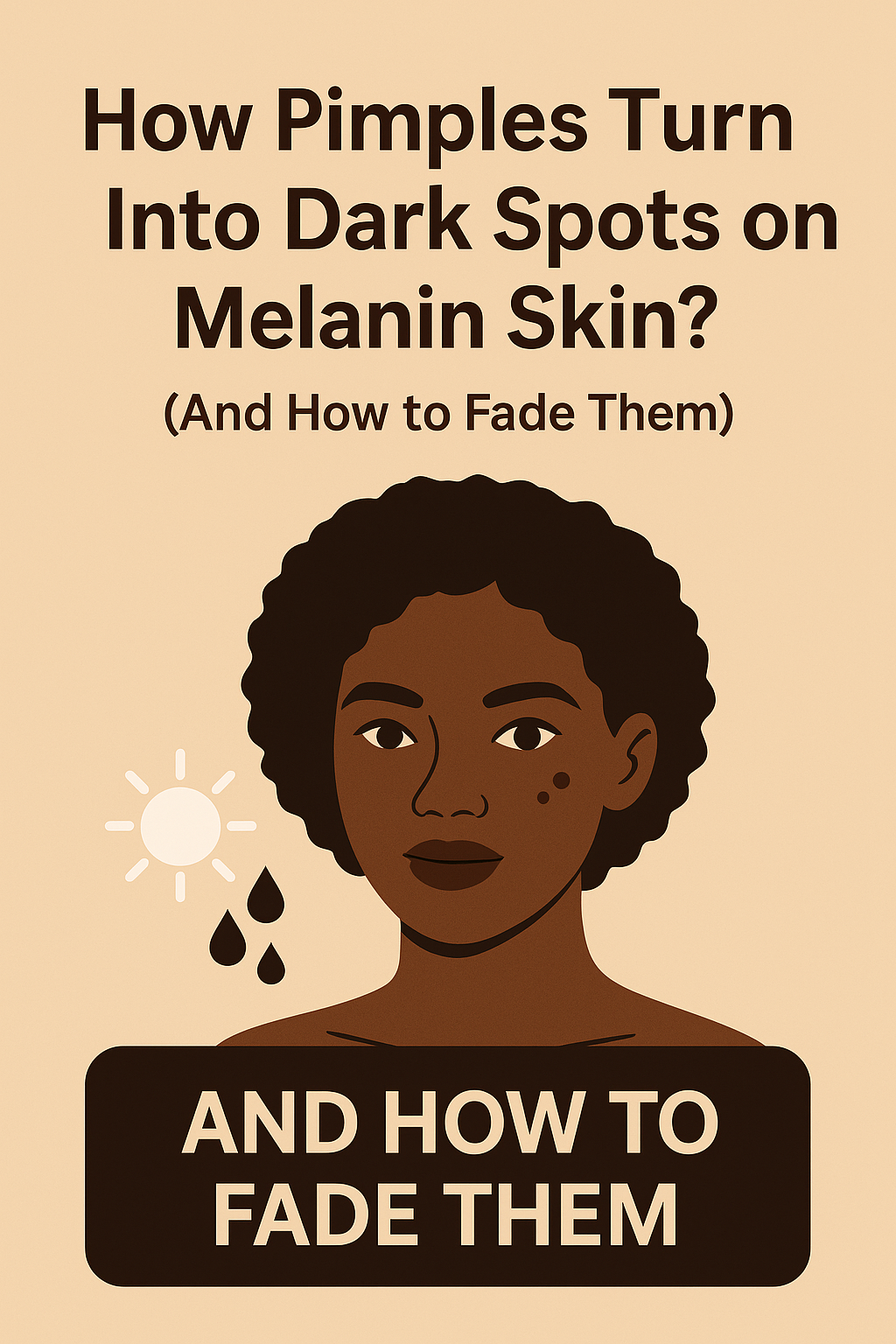
Pimples leave dark marks on darker skin because inflammation tells pigment cells to make extra melanin. These marks are called post-inflammatory hyperpigmentation (PIH). They are not scars and usually fade with time. To help them fade faster: stop picking, treat breakouts gently, use a vitamin C serum and wear sunscreen every day. Most marks improve over a few months.
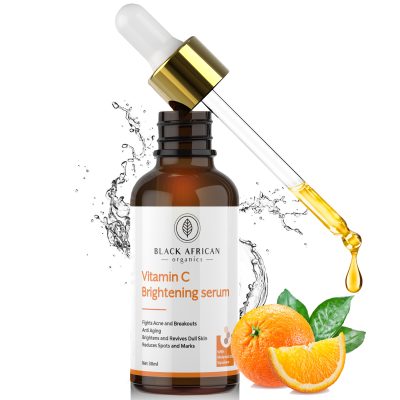
Recommended for this guide
Vitamin C and hyaluronic acid serum with Melavoid for dark marks, pigmentation and uneven tone.
Why pimples leave dark marks on melanin-rich skin
When a pimple forms, the skin becomes inflamed. In darker skin, pigment cells react strongly to inflammation and release extra melanin. That pigment stays behind after the pimple heals, leaving a brown, purple or grey mark. Research shows these marks are more common, darker and longer-lasting in skin of colour.
Things that make marks worse:
- squeezing or picking pimples
- harsh scrubs, rough cloths or very hot water
- lemon juice, toothpaste or other home “remedies” that irritate
- sun exposure, which darkens marks and slows fading
Dark mark or scar? How to tell
- Dark mark (PIH): flat, darker than your skin, no change in texture. Fades over months.
- Scar: a dent, pit or raised bump. Does not fade on its own. A dermatologist can advise on treatments.
Shop the products in this guide
Vitamin C & Hyaluronic Acid Brightening Face Serum | Infused with Melavoid & Squalene, Targeting Acne, Breakouts, & Pigmentation 30ml
✨ Key Benefits:
✔️ 🍊 Brightens skin & fades dark spots
✔️ 💥 Fights acne, pimples & breakouts
✔️ 💧 Deeply hydrates with Hyaluronic Acid
✔️ 🌱 Evens skin tone with Melavoid™
✔️ 🛡️ Strengthens skin barrier with Squalene
✔️ 👌 Lightweight, non-greasy & fast-absorbing
✔️ ✅ Perfect for all skin types — even sensitive
★ Bestseller
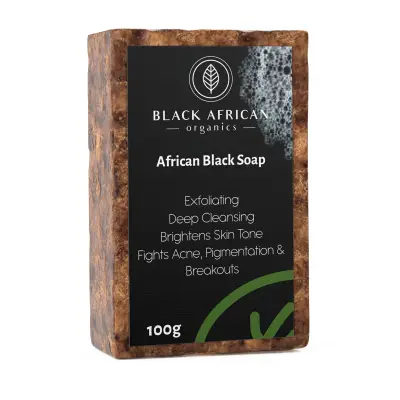
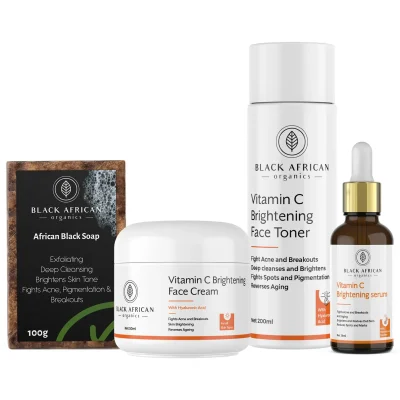
Authentic African Black Soap 100g – Brightens Skin Tone & Fades Dark Marks
A simple routine to fade dark marks
- Cleanse gently, morning and night. Use a mild cleanser like our Vitamin C Foaming Cleanser or a small amount of Black Soap Paste if your skin is oily.
- Apply vitamin C serum. Vitamin C is one of the ingredients dermatologists use for dark marks. Use our Vitamin C Serum on clean, dry skin.
- Moisturise. A healthy skin barrier is less easily irritated. Try our Vitamin C Face Cream.
- Wear sunscreen every morning. This is the step that matters most. Use SPF 30 daily and reapply outdoors. Read our guide to sunscreen for dark skin.
- Be patient. Give your routine at least 8 to 12 weeks before judging it.
Want it in one box? The Vitamin C Glow Duo pairs the serum and cleanser, and the Deluxe Kit adds SPF 30.
Stop new marks forming
- Do not squeeze pimples. Cover them with a pimple patch if you can’t resist.
- Treat breakouts early. For frequent or painful acne, see a pharmacist or doctor; controlling acne is the best way to prevent marks.
- Introduce one new product at a time so you can spot what irritates.
When dark marks are something else
If patches are large, on both cheeks, or appeared during pregnancy or on the pill, they may be melasma, often called chubaba. Blue-black or grey patches after years of bleaching creams need a doctor.
FAQs
Do dark marks go away on their own?
Many do, slowly, over months. Sunscreen and gentle care help them fade faster and stop them darkening.
How long does post-inflammatory hyperpigmentation last?
Light marks can fade in a few months; deeper marks can take six months to a year or more.
Will vitamin C lighten my skin?
No. It helps improve the look of dark marks. It does not change your natural skin tone. See fading dark marks vs lightening skin.
Written by the Black African Organics team. General skincare information, not medical advice.
Sources
- Davis & Callender (2010), Postinflammatory hyperpigmentation in skin of color
- Ahmed et al. (2025), Prevention of PIH in skin of colour: a systematic review
- Practical Dermatology: PIH in skin of color, updated review
Shop the routine
Vitamin C & Hyaluronic Acid Brightening Face Serum | Infused with Melavoid & Squalene, Targeting Acne, Breakouts, & Pigmentation 30ml
✨ Key Benefits:
✔️ 🍊 Brightens skin & fades dark spots
✔️ 💥 Fights acne, pimples & breakouts
✔️ 💧 Deeply hydrates with Hyaluronic Acid
✔️ 🌱 Evens skin tone with Melavoid™
✔️ 🛡️ Strengthens skin barrier with Squalene
✔️ 👌 Lightweight, non-greasy & fast-absorbing
✔️ ✅ Perfect for all skin types — even sensitive
★ Bestseller
Authentic African Black Soap 100g – Brightens Skin Tone & Fades Dark Marks
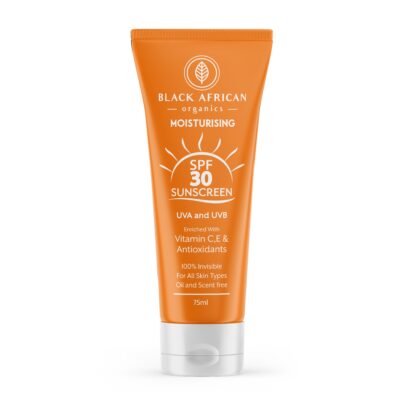
Organic Vitamin C & E SPF 30 Sunscreen with Squalene – Invisible Moisturizer for Melanin-Rich Skin, Prevents Dark Spots 50ml
✨ Why You’ll Love It:
✔️ 🛡️ Broad-spectrum SPF 30 – protects against UVA & UVB rays
✔️ 🧴 100% invisible – no white cast, no ghost face
✔️ 👁️ Eye-safe – won’t sting or cause irritation
✔️ 🌞 Perfect for brown & melanin-rich skin
✔️ 🍊 Brightens with Vitamin C, hydrates with Vitamin E
✔️ 💧 Lightweight, non-greasy & great under makeup
✔️ 🌿 Suitable for all skin types – even sensitive skin
★ Bestseller
